
The threats via microblogging platform X came a day after three international flights originating from Mumbai received bomb threats, causing trouble to hundreds of passengers and airline crew.

The airline has adopted a counterintuitive strategy of adding new aircraft and expanding capacity amid the slowdown, which seems to be paying off.

Oil marketing companies (OMCs), paint manufacturers, tyre producers, and aviation stocks witnessed significant gains as Brent crude oil prices slipped below $70 per barrel. The price drop came after a double blow: The US imposed tariffs on Canada and Mexico, including energy imports, and OPEC+ - the group of major oil-producing nations including Russia - announced an output increase of 138,000 barrels per day, the first such hike since 2022.

In 14 days, more than 350 flights operated by the Indian carriers have received hoax bomb threats. Most of the threats were issued through social media.
The aviation ministry is not in the business of regulating tariffs, says its president Aditya Ghosh.

IndiGo's share sale will raise the company's retained earnings to Rs 2,680 crore.
IndiGo has proposed to issue 185,000 shares worth to Chief Executive and Whole-time Director Ronojoy Dutta under the company's Employee Stock Option Plan (ESOP). The shares that can be exercised at a price of Rs 765 apiece is worth Rs 14,15,25,000. Dutta can exercise 25 per cent of that at the end of first year, 35 per cent at the end of second year, and the remaining in December 2023 when his current tenure ends.

SpiceJet promoter Kalanithi Maran would need to invest at least Rs 1,500 crore (Rs 15 billion) almost immediately to stabilise the airline.
IndiGo on Friday said it will not charge any fees to change time or date on domestic tickets that are booked between April 17 and April 30.

The issues include not getting refunds on airline and hotel bookings, getting charged a service fee even if airlines have waived cancellation charges and so on. Complaints are piling up on Twitter, Facebook and other social media channels as more and more people cancel their travel plans due to the ongoing Covid-19 pandemic.
Long-haul low-cost carriers like Scoot and AirAsia X offer a similar configuration.
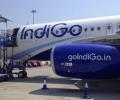
Once the coronavirus lockdown is over in India and commercial passenger flights are permitted again, IndiGo will deep clean its aircraft more frequently, stop in-flight meal service for a brief period and will fill a maximum 50 per cent capacity in airport buses, the airline's CEO Ronojoy Dutta said on Friday. "In situations like these, companies do not manage to growth or profitability but to liquidity. That means our singular focus is on cash flow. We are examining all our fixed costs and looking for ways to minimise them," he said.

Budget carrier IndiGo has assured its employees that it will not make any deduction in their salaries or leaves due to the suspension of domestic flights till March 31. The government's decision to suspend domestic flight would come into effect from midnight Tuesday, as part of larger efforts to curb spreading of coronavirus infections.

IndiGo revamps website, Jet ties up with Twitter
"The return fare on economy class to most European capitals from Mumbai are close to 50,000 plus. If an LCC can offer direct connectivity for a basic fare of 25,000 with additional top ups for meals, baggage and blankets, which further takes the fare to, say, 35,000, it is still a value deal."

First it was Citibank which ended its exclusive tie-up with Jet Airways, after 12 years. Now it is the turn of American Express to go airline-agnostic -- despite having a co-branded card with troubled carrier Kingfisher Airlines.
Southwest Airlines remains the world's biggest low cost carrier (LCC), according to Centre for Asia Pacific Aviation (CAPA).
Southwest Airlines remains the world's biggest low cost carrier (LCC), according to Centre for Asia Pacific Aviation (CAPA).

India's biggest airline IndiGo is set to file the prospectus next week for a domestic stock market listing.

It dismissed reports suggesting a stake sale as 'baseless'.
IndiGo and Jet Airways took the second and third rank, alternatively, during this period.

'That refresh programme -- because they are big aircraft and we cannot ground them all at the same time -- will last well into 2027.'

Heavy rains and thunderstorm on Monday brought Delhiites a much-needed respite from the lengthy spell of sweltering heat, but it also affected road and air traffic during the morning rush hours, and brought down houses and trees, leaving at least eight people injured.

At the heart of the strategy is the basic fundamental of keeping costs for long-haul flights low.

Country's largest airline has set up a centralised unit to minimise disruptions.
The carrier's total income rose over 28 per cent to Rs 8,229.4 crore in the three months ended December 2018.
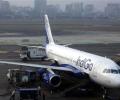
This will take its total number of services to 613.

While global majors like JetBlue, RyanAir, Southwest sell almost 90 per cent of their tickets through their own websites or apps, airlines in India have a minuscule share of around 25 per cent through direct channel booking.
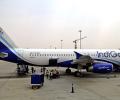
IndiGo retained its No. 1 position amongst domestic airlines growing its market share.
United Airlines, following its merger with Continental has emerged as the world's biggest airline measured by available seat kilometers (capacity).
IndiGo has about 40 per cent market share, more than double that of Air India's 14.8 per cent.
Tony Fernandes had blamed Indian domestic carriers for preventing AirAsia's India launch earlier, too, but this was the first time he named an airline.
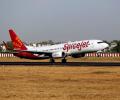
SpiceJet's resurgence, once the new funding is in place, has the potential to disrupt the Indian aviation market in 2024 as the airline will bring its grounded aircraft back to service and lease as many planes as possible to be competitively relevant, aviation consultancy firm Capa India said on Thursday. "Although the market for procuring aircraft in 2024 is exceptionally tight, we expect that SpiceJet will bring stored aircraft back into operations, and will wet or dry lease as much capacity as possible, in order to be competitively relevant. "This will have a material impact on the industry structure, and possibly on domestic profitability," Capa India said in its report.
The DGCA is conducting special audit of all airlines and airports which are in monsoon-affected areas in the wake of multiple landing incidents across the country.
Airlines sought a limited period concession of the standing rule of slot allocation, which mandates that firms must operate at least 80 per cent of their allocated slots.
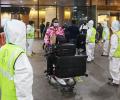
Airlines are slashing salaries and re-negotiating vendor contracts as drastic fall in passengers has hurt revenue. Go First has cut staff salaries by around 16 per cent while IndiGo and SpiceJet are enforcing a leave without pay (LWP) policy and pay by the hour structure respectively to prune expenses. Vistara, which reversed pay cuts for junior staff including managers and cabin crew in March, is not touching employee salaries at the moment and instead focusing on vendor renegotiation and maximising cargo revenue. An Air India executive said efforts are on to pay salaries by 7th or 8th of June.

Some airlines, says Anjuli Bhargava, are convinced there's a conspiracy to malign them.

IndiGo and other airlines have said they are improving their staff training, looking at better ways of communication and customer awareness on operational matters.

However, if a flyer has been allotted the middle seat due to a high passenger load, 'then additional protective equipment like wrap-around gown of the Ministry of Textile approved standards' must be provided to him or her in addition to a three-layered face mask and face shield, a DGCA order, accessed by PTI, said.

Amid a massive global outage that hit operations of airlines, banks and businesses across the globe, Microsoft on Friday said that it is aware of the issue affecting Windows devices due to an update from a third-party software platform.
